troy bilt 2700 psi pressure washer owners manual
Troy-Bilt 2700 PSI Pressure Washer Owners Manual: A Comprehensive Plan
Welcome! This manual guides you through setup, operation, and maintenance of your Troy-Bilt 2700 PSI Pressure Washer, ensuring optimal performance and longevity.
Congratulations on purchasing the Troy-Bilt 2700 PSI Pressure Washer! This powerful cleaning tool is designed for a wide range of outdoor tasks, from washing vehicles and siding to cleaning decks and patios. This manual serves as a comprehensive guide to ensure safe and effective operation.

Before first use, carefully review this entire manual, paying close attention to the safety precautions and operating instructions. Understanding your pressure washer’s components and proper usage will maximize its cleaning power and extend its lifespan. The 2700 PSI rating indicates substantial cleaning capability, making it suitable for tackling tough grime and dirt.
This manual includes detailed information on assembly, operation, maintenance, and troubleshooting. We’ve also included a parts diagram to help with future maintenance or replacement needs. Proper care and adherence to these guidelines will guarantee years of reliable service from your Troy-Bilt pressure washer.
Safety Precautions & Warnings
Important! Pressure washers operate with high-pressure water, posing potential hazards if not used correctly. Always read and understand all safety instructions before operating this machine. Never point the wand at yourself or others. Wear safety goggles to protect your eyes from debris and spray.
Ensure a stable footing while operating the pressure washer. Avoid using the machine on slippery surfaces. Keep children and pets away from the work area. Never alter the factory-set safety features. Disconnect the power source (or fuel supply) before performing any maintenance or repairs.
Be aware of your surroundings and potential electrical hazards. Do not use the pressure washer near electrical outlets or exposed wiring. Improper use can result in serious injury. Always relieve pressure before disconnecting hoses or nozzles. Follow all local safety regulations.
General Safety Rules
Prioritize Safety: Before each use, inspect the pressure washer for any damaged parts. Do not operate if components are missing or broken. Always use the correct nozzles and accessories as specified in this manual. Never attempt to modify the pressure washer in any way.
Maintain a safe working distance from the surface being cleaned. Start with a low-pressure setting and gradually increase as needed. Avoid prolonged exposure to the high-pressure spray. Wear appropriate clothing, including closed-toe shoes, to protect your skin.
Be mindful of bystanders and ensure they are a safe distance away. Never leave the pressure washer unattended while it is running. Always turn off the machine and disconnect the power source when not in use. Store the unit in a secure, dry location.
High-Pressure Spray Hazards
Serious Injury Risk: The high-pressure spray emitted by this Troy-Bilt 2700 PSI pressure washer can cause severe injuries. Never point the wand at yourself or others. The force of the spray can penetrate skin and cause deep wounds.
Avoid spraying electrical components, wiring, or outlets – risk of electrocution is present. Do not spray flammable liquids, as this could create a fire hazard. Be cautious when cleaning surfaces that may contain lead-based paint, as the spray can disperse harmful particles.
Always maintain a firm grip on the wand and nozzle. Be aware of the recoil force. If the nozzle becomes clogged, release the trigger and turn off the pressure washer before attempting to clear it. Improper use can lead to serious bodily harm; read all safety precautions carefully.
Component Identification & Parts Diagram
Familiarize Yourself: Before operating your Troy-Bilt 2700 PSI pressure washer, it’s crucial to identify all components. Key parts include the high-pressure hose, spray gun (wand), various nozzles, the detergent tank, and the engine housing. The trigger controls water flow, while the pressure adjustment knob regulates spray intensity.
Locate the water inlet connection for your garden hose and the power switch. Understand the function of the unloader valve, which relieves pressure when the trigger is released. A detailed exploded view diagram, found later in this manual, illustrates how these parts assemble.
Refer to the parts list for common part numbers, aiding in future maintenance or replacements. Knowing your pressure washer’s anatomy ensures safe and effective operation, and simplifies troubleshooting.
Detailed Parts List (with common part numbers)
Essential Replacements: Maintaining your Troy-Bilt 2700 PSI pressure washer is easier with readily available parts. Here’s a list of frequently replaced components and their typical part numbers (always verify with your model):
- High-Pressure Hose: 900982
- Spray Gun/Wand: 900978
- Nozzle Set (5-piece): 900985
- Detergent Tank: 900990
- Power Washer Pump: 900876
- Unloader Valve: 900882
- Thermal Relief Valve: 900895
These numbers are subject to change; consult the Troy-Bilt website or a local authorized dealer for the most accurate and up-to-date information. Having these part numbers handy streamlines repairs and minimizes downtime. Always use genuine Troy-Bilt replacement parts to ensure compatibility and performance.
Exploded View Diagram – Understanding Assembly
Visualizing the Build: An exploded view diagram is crucial for understanding how your Troy-Bilt 2700 PSI pressure washer is assembled. This detailed illustration breaks down the unit into individual components, showcasing their precise placement and relationship to one another.
The diagram typically highlights the engine, pump, high-pressure hose connections, spray gun assembly, and various fasteners. It’s an invaluable resource when disassembling for maintenance, troubleshooting, or replacing parts. Refer to the official diagram included with your owner’s manual or available on the Troy-Bilt website.
Carefully studying the diagram before beginning any repair work will prevent errors and ensure proper reassembly. Pay close attention to the orientation of parts and the use of washers and seals.
Assembly Instructions
Getting Started: Before you begin, ensure you have all components laid out and refer to the parts list to verify everything is present. Assembly is straightforward, designed for user-friendliness. Begin by attaching the handle to the main unit using the provided bolts and washers – ensure a secure fit, but don’t overtighten.
Next, connect the wand to the trigger gun, again verifying a firm lock. Improper connection can lead to leaks or reduced pressure. Following this, carefully attach the high-pressure hose to both the pump outlet and the trigger gun inlet. Double-check all connections for tightness before proceeding.
Always consult the detailed diagrams in your owner’s manual for visual guidance; Proper assembly is vital for safe and effective operation.

Handle & Wand Attachment
Handle Installation: Begin by aligning the handle with the designated mounting points on the pressure washer unit. Secure it using the provided bolts, washers, and nuts. Tighten firmly, but avoid over-tightening, which could damage the plastic components. Ensure the handle is stable and doesn’t wobble before proceeding.
Wand Connection: The wand attaches to the trigger gun via a quick-connect mechanism. Align the wand connector with the trigger gun inlet and push firmly until it clicks into place. To disconnect, depress the release collar on the trigger gun while gently pulling the wand away.
Important Note: Always verify a secure connection for both the handle and wand before operating the pressure washer. A loose handle or wand can create a safety hazard and reduce cleaning effectiveness.

Hose Connection & Water Supply Setup
Hose Attachment: Connect the high-pressure hose to the outlet port on the pressure washer pump and to the trigger gun. Ensure both connections are tight and secure using the provided fittings. Hand-tighten initially, then use a wrench for a final, firm connection – avoid over-tightening.
Water Supply: Attach a standard garden hose (not included) to the water inlet on the pressure washer. Ensure the garden hose is free of kinks and obstructions. A minimum water flow of 2.0 gallons per minute is recommended for optimal performance.
Water Source Considerations: Use a clean water source. If your water supply contains sediment, a filter is recommended to prevent damage to the pump. Always turn on the water supply fully before starting the engine.
Operating Instructions
Pre-Start Check: Before each use, verify the oil level is correct and the fuel tank contains fresh gasoline. Ensure all connections – hose, trigger gun, and nozzles – are securely attached. Confirm the water supply is fully turned on.
Starting Procedure: Follow the cold start procedure outlined in the manual. Typically, this involves turning the fuel valve to the ‘ON’ position, setting the choke, and pulling the starter cord until the engine ignites. Allow the engine to warm up for a few minutes before applying pressure.
Operational Safety: Always hold the trigger gun firmly and maintain a safe distance from the surface being cleaned. Never point the wand at yourself or others. Be mindful of bystanders and pets during operation.
Starting the Pressure Washer (Cold Start & Restart)
Cold Start Procedure: Ensure the fuel valve is in the ‘ON’ position. For a cold start, engage the choke lever; Slowly pull the starter cord until you feel resistance, then pull briskly. Repeat if necessary until the engine starts. Gradually disengage the choke as the engine warms up.
Warm Restart Procedure: If the engine is warm, the choke may not be needed. Simply turn the fuel valve to ‘ON’ and pull the starter cord firmly. If it doesn’t start immediately, try a single choke engagement and repeat the pull.
Important Notes: Never force the starter cord. If the engine floods, disengage the choke and pull the cord several times to clear excess fuel. Always refer to the full manual for detailed illustrations and safety precautions.
Adjusting Pressure Settings
Pressure Regulation: Your Troy-Bilt 2700 PSI pressure washer features an adjustable pressure setting, allowing you to tailor the cleaning power to the task. Locate the pressure adjustment knob, typically found near the trigger gun.
Adjusting the Pressure: Turning the knob clockwise increases the pressure, suitable for tougher cleaning jobs like concrete or heavily soiled surfaces. Turning it counter-clockwise decreases the pressure, ideal for more delicate surfaces like painted wood or vehicles.
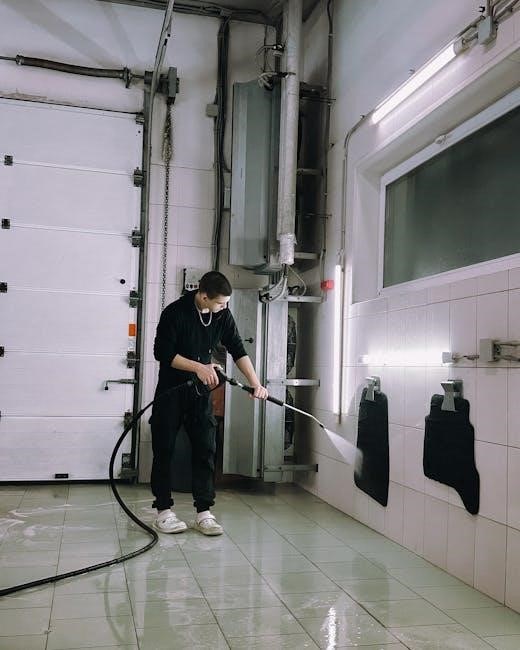
Testing & Caution: Always test the pressure on an inconspicuous area first to ensure it doesn’t cause damage. Start with the lowest setting and gradually increase until you achieve the desired cleaning effect. Never exceed the recommended pressure for any surface.

Nozzle Selection & Usage
Optimizing Cleaning: Choosing the correct nozzle is crucial for effective and safe pressure washing. Your Troy-Bilt 2700 PSI washer comes with a variety of nozzles, each designed for specific cleaning applications. Incorrect nozzle selection can damage surfaces or reduce cleaning efficiency.
Nozzle Color Coding: Nozzles are typically color-coded for easy identification. A 0° nozzle delivers a concentrated, powerful stream for stubborn stains, while a 15° nozzle is good for automotive and hard surfaces. 25° and 40° nozzles offer wider spray patterns for general cleaning, and the soap nozzle is for applying detergents.
Proper Technique: Always hold the nozzle at a consistent distance from the surface and use sweeping motions. Avoid concentrating the spray in one spot for extended periods to prevent damage.
Understanding Nozzle Types (0°, 15°, 25°, 40°, Soap)
Decoding the Spray: Each nozzle delivers a different spray angle and pressure intensity. The 0° nozzle creates a pinpoint stream, ideal for blasting away deeply embedded dirt but requires extreme caution to avoid damage. A 15° nozzle offers a narrower spray, effective on concrete and automotive surfaces.
Wider Coverage: The 25° nozzle provides a wider cleaning path for general outdoor tasks like siding and decks. The 40° nozzle delivers the widest spray pattern, suitable for delicate surfaces or rinsing large areas. Finally, the soap nozzle (often white) creates a low-pressure, high-volume spray for applying detergents effectively.

Important Note: Always test nozzles in an inconspicuous area first to ensure compatibility with the surface being cleaned. Incorrect nozzle use can lead to etching or damage.
Choosing the Right Nozzle for Different Surfaces
Surface Sensitivity is Key: Selecting the correct nozzle protects your surfaces and maximizes cleaning power. For concrete and brick, the 15° or 25° nozzles are excellent choices, effectively removing grime without causing significant damage. Wood decks and siding benefit from the gentler 25° or 40° nozzles to prevent splintering or etching.
Delicate Tasks: When cleaning cars, boats, or painted surfaces, always use the 40° nozzle and maintain a safe distance. The 0° nozzle should only be used with extreme caution on very durable materials, and never on painted surfaces. Utilize the soap nozzle for applying detergents evenly during the washing process.
Remember: Start with a wider angle and gradually decrease it if more cleaning power is needed. Always test in an inconspicuous area first!
Maintenance & Troubleshooting
Regular maintenance extends the life of your Troy-Bilt 2700 PSI pressure washer. After each use, flush the pump with clean water to remove detergent residue. Inspect the high-pressure hose for cracks or leaks, and check nozzle connections for tightness. Cleaning involves wiping down the unit with a damp cloth.
Troubleshooting Common Issues: If the washer lacks water pressure, verify the water supply is fully on and the inlet filter is clean. An engine that won’t start may indicate low oil, a clogged fuel filter, or a faulty spark plug – consult the engine manufacturer’s manual. Uneven spray often points to a partially clogged nozzle; soak it in vinegar and rinse.
Always disconnect the spark plug wire before performing any maintenance. Refer to the parts diagram for assistance with replacements.
Cleaning & Storage Procedures
Post-use cleaning is crucial for longevity. Always disconnect the power source and water supply before cleaning. Rinse the exterior of the pressure washer with a mild detergent and water, avoiding direct spray onto the engine or electrical components. Inspect and clean the nozzles regularly to prevent clogging – a vinegar soak is often effective.
For storage, drain all water from the pump, hose, and wand to prevent freezing damage. Store the unit in a clean, dry location, protected from the elements. Consider using a fuel stabilizer if storing for extended periods (over 30 days) to prevent fuel degradation. Proper hose storage prevents kinks and damage; coil it loosely.
Long-term storage requires winterizing (see dedicated section). Keep the manual accessible for future reference.

Common Issues & Solutions (e.g., No Water Pressure, Engine Won’t Start)
No Water Pressure: Check the water supply – ensure it’s fully on. Inspect the inlet filter for clogs and clean if necessary. Verify the hose isn’t kinked or damaged. A clogged nozzle can also cause this; try cleaning or replacing it.
Engine Won’t Start: Confirm sufficient fuel and oil levels. Check the spark plug for fouling and replace if needed. Ensure the choke is properly set (cold start). If it still won’t start, the recoil starter may need attention.
Engine Surging: A dirty air filter can cause surging. Clean or replace it. Low oil shut-off activates if oil levels are too low – add oil. If problems persist, consult a qualified technician.
Winterizing Your Pressure Washer
Protecting from Freezing: Before storing for winter, completely drain all water from the pump, hose, and wand. Disconnect the water supply and run the engine briefly until no water remains. Use pump saver fluid (antifreeze specifically for pressure washers) according to the product instructions – this lubricates internal components.
Fuel System Preparation: Stabilize the fuel in the tank with a fuel stabilizer to prevent degradation during storage. Alternatively, drain the fuel tank completely. Check and change the oil before long-term storage.

Storage Guidelines: Store the pressure washer in a dry, protected location, ideally indoors, to prevent corrosion. Cover it to shield from dust and debris.